

.webp)
What are business travel emissions?
Business travel emissions are the greenhouse gases produced by employee travel in vehicles and accommodation not owned or operated by the reporting company, classified under Scope 3 Category 6 of the GHG Protocol.
Most corporate carbon reports are wrong. Not by a small margin. If your data comes from flight bookings alone, you are missing entire categories of emissions that CSRD auditors are now required to check.
Hotels. Ground transport. Rail. None of them live in your TMC platform. They sit in fragmented expense lines, unprocessed folios, and miscellaneous spend categories that standard carbon tools never reach. According to Transport & Environment, 85% of global companies lack credible plans to reduce their corporate flying emissions. The root cause is not ambition. It is architecture: most organisations are not measuring the full trip.
This guide explains where calculating Scope 3 emissions from business travel breaks down, what data each category actually requires, and how consolidated T&E data closes the gap for audit-ready CSRD reporting.
In This Article
- Why are business travel emissions so hard to report accurately?
- Why is hotel data the biggest gap in Scope 3 carbon reporting?
- What makes ground transport emissions so difficult to capture?
- How does the PredictX 4-Layer Data Chain work?
- How does consolidated T&E data produce audit-ready Scope 3 reporting?
- Frequently Asked Questions
Why are business travel emissions so hard to report accurately?
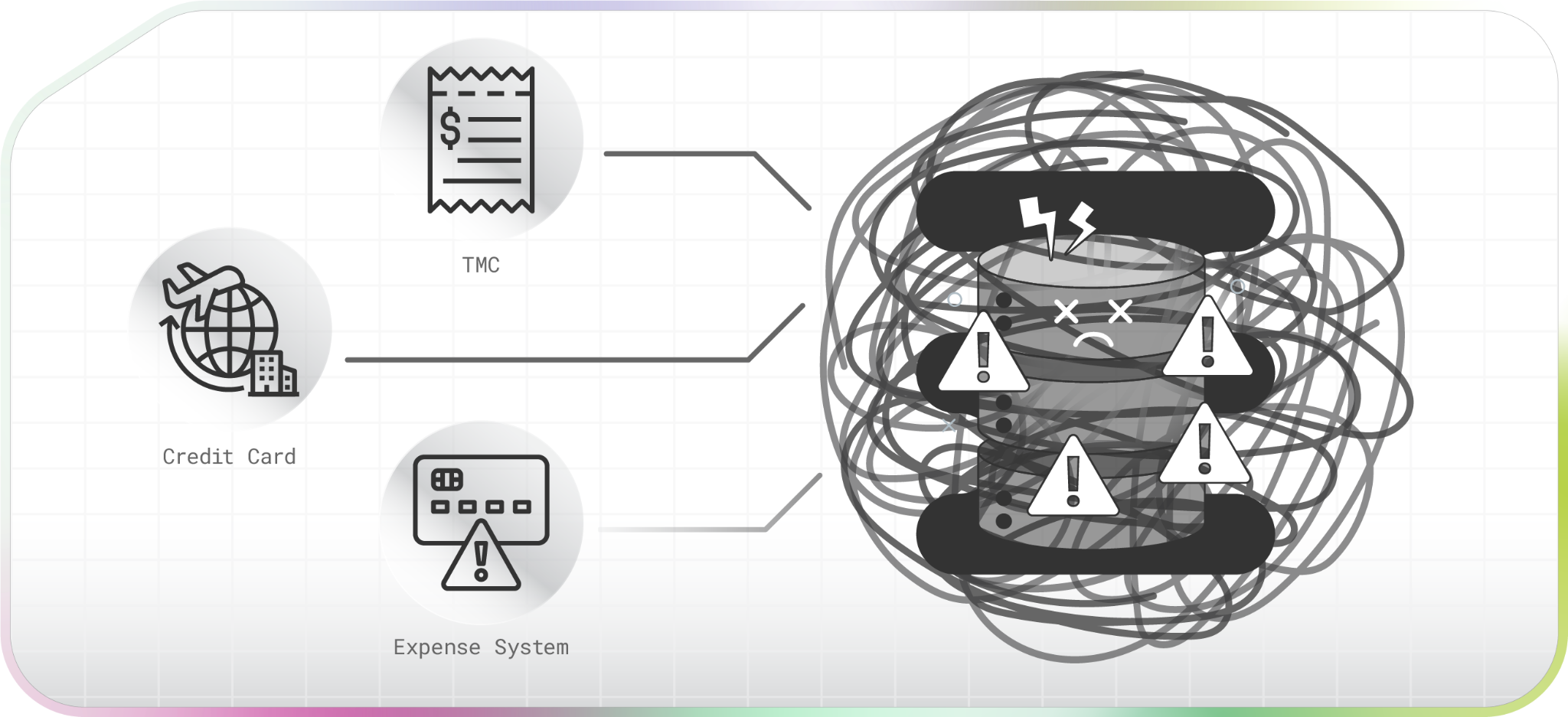
Business travel emissions are hard to report accurately because the data lives across multiple disconnected systems: TMC booking platforms, expense tools, hotel folios, and rail feeds. None of them connect by default.
Business travel emissions, also known as Scope 3 Category 6 emissions under the Greenhouse Gas Protocol, cover all greenhouse gas emissions from employee travel in vehicles or accommodation not owned by the company. The GHG Protocol explicitly includes flights, rail, car rental, taxis, and hotel stays. CSRD, the EU's Corporate Sustainability Reporting Directive, requires all of these to be reported with third-party assurance. A carbon report covering only flights fails that test.
Most travel management companies provide solid air data: route, cabin class, airline. The structural problem is that their data ends at the boarding gate. Everything before and after it sits somewhere else, or nowhere at all: the taxi to the airport, the hotel, the rental car, the ride-share from the station.
The IPCC Sixth Assessment Report confirms that Scope 3 can account for over 70% of a company's total carbon footprint. For organisations with active travel programmes, the gap between what they are reporting and what they are actually emitting is material.
"You cannot manage what you don't measure accurately. We deliver certified, auditable CO2 emission calculations aligned with frameworks like the GHG Protocol and CSRD." Keesup Choe, CEO, PredictX
The three data sources most companies rely on each carry a different blind spot in their ESG reporting:
The scale of the problem in numbers:
Why is hotel data the biggest gap in Scope 3 carbon reporting?
Hotel emissions are impossible to calculate from spend data alone because a credit card transaction contains none of the four variables an accurate hotel carbon footprint calculation requires.
To calculate hotel stay emissions to the standard required by the GHG Protocol and CSRD sustainability reporting, you need four things: the specific property (not just the brand), the number of nights, the regional energy grid carbon intensity, and ideally the hotel's own consumption data via the Hotel Carbon Measurement Initiative (HCMI). A "$300 at Marriott" expense line provides none of these.
The 4-Variable Hotel Emissions Gap
Each of these variables is genuinely necessary. None can be estimated from spend data alone.
1. Specific property identity. Brand name is not sufficient. Properties within the same chain vary in energy profile based on age, renovation history, and local infrastructure.
2. Number of nights. A spend figure without stay duration cannot produce a per-night emission factor. A $600 charge could be one night or three.
3. Regional grid carbon intensity. France's nuclear-heavy grid runs at around 35 g CO2e/kWh. Some European summer grids run above 330 g CO2e/kWh. Two hotels charging the same nightly rate in different countries can have emissions profiles differing by a factor of ten. Spend-based methods erase that difference entirely.
4. Hotel-reported energy data (HCMI standard). HCMI-standard property data is the most accurate source available. Spend-based estimates carry a 30 to 40% accuracy variance under the GHG Protocol's own guidance, which does not meet CSRD audit requirements.
Spend-Based vs Distance-Based: Which Method Is Your Scope 3 Report Using?
The GHG Protocol defines three methods for calculating business travel emissions. Most companies default to the least accurate one. Toggle below to see what each method delivers and what it costs you in audit readiness.
The same problem applies to travel class. According to the Google Travel Impact Model, business class generates 1.5 to 4 times more CO2e per passenger than economy, and first class generates 1.5 to 5 times more. On wide-body aircraft, premium seats account for roughly 35% of total flight emissions while occupying a fraction of the seats. A report treating all cabin classes equally is undercounting in two directions at once.
The real data sits in hotel folios, the itemised checkout bills, which travel programmes almost never capture systematically. Folios get photographed, uploaded as expense attachments, manually categorised as "accommodation," and stripped of every variable a credible CO2 calculation needs. Without an audit-ready T&E data chain of custody platform that extracts and enriches folio-level data, spend-based estimates with 30 to 40% accuracy variance are the only alternative. That is not auditable under CSRD.

What makes ground transport emissions so difficult to capture?
Ground transport is the most fragmented Scope 3 emissions category because car rentals, rail, and ride-sharing each require completely different data inputs, and each breaks down differently inside standard expense systems.
Rail travel is the obvious sustainable alternative, and the numbers back that up. A London to Paris journey via Eurostar produces around 2 kg CO2e per passenger versus approximately 61.5 kg CO2e by plane, a 97% reduction according to Eurostar's sustainability reporting. Across European routes broadly, aviation emits five to six times more CO2 per passenger kilometre than high-speed rail. Air vs rail modal shift is one of the highest-leverage CO2 reduction strategies available to corporate travel managers today.
Rail demand is growing fast. EU rail passenger transport reached 429 billion passenger-kilometres in 2023, an 11.2% year-on-year increase according to Eurostat. That volume of rail trips needs to appear in Scope 3 calculations, not disappear into unstructured expense lines.
Rail emissions still need to be tracked, though. Grid intensity varies by operator and by time of day. Route-specific rail data is what separates a defensible modal shift claim from an unverifiable one.
Car rentals present a separate problem. Calculating ground transport emissions requires car type, fuel type, and distance driven. A rental for "4 days" on a credit card statement contains none of that. An electric vehicle and a petrol saloon in the same booking class can have a three-times emissions difference. The PredictX guide to car rental emissions trackingcovers how to close this gap using integrated T&E data.
Taxis and ride-share are the highest-volume ground transport category in most travel programmes and the hardest to capture. Many are paid personally and claimed via expenses as miscellaneous spend. No distance. No vehicle type. No fuel data.
"The complexity of ground transport data is exactly why off-the-shelf carbon tools fall short. Route, fuel type, and grid mix are not optional variables. They are the calculation." Philipp von Lamezan, CEO and Co-founder, SQUAKE

How Does the PredictX 4-Layer Data Chain Work?
The PredictX 4-Layer Data Chain works by consolidating TMC feeds, hotel folios, rail operator APIs, and expense receipts into a single certified calculation engine, producing an immutable audit trail across every trip category.
Layering a carbon calculator on top of incomplete expense data does not fix the gap. The source data itself needs to be consolidated, cleansed, and connected to a certified methodology before any Scope 3 calculation is meaningful. The PredictX CSRD Scope 3 business travel emissions compliance guide sets out the full data chain requirements in detail.
The 4-Layer Data Chain: Step by Step
Layer 1: Data Consolidation. TMC booking feeds, hotel folios extracted from expense systems, rail operator API connections, and ride-share receipts are pulled into a unified T&E data pipeline. Structured and unstructured spend lines are ingested together.
Layer 2: Agentic AI Categorisation. Agentic AI identifies and categorises unstructured ground transport receipts that would otherwise remain as generic spend lines. Vehicle type, distance estimates, and city-level fuel factors are applied at this stage.
Layer 3: Certified Calculation. Every trip category is calculated using GHG Protocol, ISO 14083 (the international standard for greenhouse gas calculations from transport chains), and CORSIA/EU ETS standards via SQUAKE. Granular inputs replace spend-based averages: aircraft type, rail operator, cabin class, and regional grid mix.
Layer 4: Audit Trail Generation. Every CO2e figure is attached to a traceable source record with documented emission factors and calculation methods. The immutable audit trail makes outputs defensible under CSRD third-party assurance.
"It's about granular, real-time CO2 tracking. You need to see emissions across all activities (air, rail, car rental, hotel) broken down by traveller and business unit." Keesup Choe, CEO, PredictX
The 2025 Net-Zero Business Travel Playbook from PredictX and SQUAKE covers how to move from this data foundation to active CO2 reduction strategy and net-zero targets.
How does consolidated T&E data produce audit-ready Scope 3 reporting?
Consolidated Travel and Expense data produces audit-ready Scope 3 reporting by pulling hotel folios, rail feeds, and expense receipts into a single certified calculation engine that covers every trip category, not just flights.
PredictX, in partnership with SQUAKE, is built around exactly this integration. The PredictX and SQUAKE integration connects to rail operator APIs, extracts hotel folio data from expense systems, and uses agentic AI to categorise ground transport receipts that would otherwise be unstructured spend lines. The PredictX and SQUAKE product sheet for ESG compliance covers the full technical specification.
"Integrating with the technology and innovation leader in travel and expense data analytics is a natural step. Together, we're raising the bar for what enterprise clients can expect from sustainability tools, transforming data into meaningful action." Philipp von Lamezan, CEO and Co-founder, SQUAKE
The result is a complete corporate travel carbon reporting ledger where every trip category carries a traceable CO2e figure, ready for ESG performance management and net-zero strategy.
Scope 3 Travel Reporting Maturity Model
Use this framework to assess where your current programme sits and identify what the next step requires.
Here is what the two main approaches deliver in practice:
The PredictX and SQUAKE audit-ready CO2 reporting guide covers implementation steps, and the travel data and predictive analytics for net-zero targets resource connects this to longer-term decarbonisation strategy.

Calculate Your CSRD Audit Risk in 30 Seconds
How this calculator estimates your Scope 3 coverage gap
The calculator estimates the volume of business travel emissions missing from a flight-only Scope 3 report by applying two additional emission factors to your trip data.
Hotel emissions are calculated using the DEFRA baseline factor of 21.4 kg CO2e per hotel night, multiplied by the number of trips and average nights per trip. Ground transport emissions are estimated at 15% of reported flight CO2e per trip, based on the GHG Protocol Category 6 average ratio of ground transport to air travel emissions across enterprise programmes. Both figures are indicative estimates; actual emissions will vary based on property location, grid intensity, vehicle type, and fuel mix.
The result is the volume of tCO2e that is structurally absent from a flight-only Scope 3 report, expressed both as a total and as a percentage of the full trip footprint. This percentage is the figure that CSRD third-party assurers assess for materiality.
Key takeaway
Business travel emissions reports that only track flights are incomplete by design. Hotels and ground transport sit in fragmented expense systems that standard TMC feeds never reach. CSRD auditors will find those gaps. If your current report cannot answer how much your hotel stays in high-carbon grid regions contributed last quarter, you are not audit-ready. Consolidated T&E data with certified CO2 emission calculations is the only route to a defensible Scope 3 carbon report.
Your next CSRD audit will ask about hotels, ground transport, and cabin class data. Most current reports cannot answer those questions. Find out exactly what PredictX's corporate travel sustainability platform would surface in yours, and whether your current Scope 3 report would pass.
Frequently Asked Questions
What is Scope 3 Category 6 and does it include hotels?
Scope 3 Category 6 covers all business travel emissions from transportation and accommodation not owned by the reporting company, as defined by the Greenhouse Gas Protocol. Under the GHG Protocol, hotel stays are optional in Category 6 but recommended. Under CSRD sustainability reporting requirements, omitting hotels or ground transport creates a material gap that third-party assurers will flag. For any company subject to CSRD, the full trip must be reported.
Why do flight-only business travel emissions reports fail CSRD requirements?
Flight-only corporate carbon reports fail CSRD because the directive requires complete Scope 3 disclosure with third-party assurance, and hotels and ground transport are material emission categories. TMC booking data only captures managed air travel. Hotels booked outside corporate tools and ground transport paid personally by employees never enter that system. The data gap is structural, not accidental.
What is the GHG Protocol and why does it matter for calculating Scope 3 emissions?
The Greenhouse Gas Protocol is the globally dominant standard for measuring greenhouse gas emissions, and it defines how Scope 3 business travel calculations must be structured. Its Category 6 guidance requires flight, rail, car rental, and hotel emissions to be captured using fuel-based, distance-based, or spend-based methods in that order of accuracy. Most companies default to spend-based, the least accurate method, carrying a 30 to 40% variance.
What data do you need to calculate hotel emissions accurately for ESG reporting?
You need the specific property, the number of nights, the regional grid carbon intensity, and ideally HCMI-standard sustainability data from the hotel itself. Spend-only estimates carry a 30 to 40% accuracy variance. Grid intensity varies by a factor of ten or more across Europe, which means a spend-based average is almost always wrong depending on location. Automated carbon reporting tools that extract folio-level data close this gap.
How do you capture taxi and ride-share emissions in a corporate travel programme?
Distance-based calculation from expense receipt data is the most reliable method for travel carbon footprint tracking, with agentic AI used to identify and categorise unstructured ride-share receipts. Platforms like PredictX apply regional emission factors by city and vehicle type once receipts are tagged. Spend-based fallback is available where distance data cannot be extracted, but accuracy drops significantly.
Related Posts
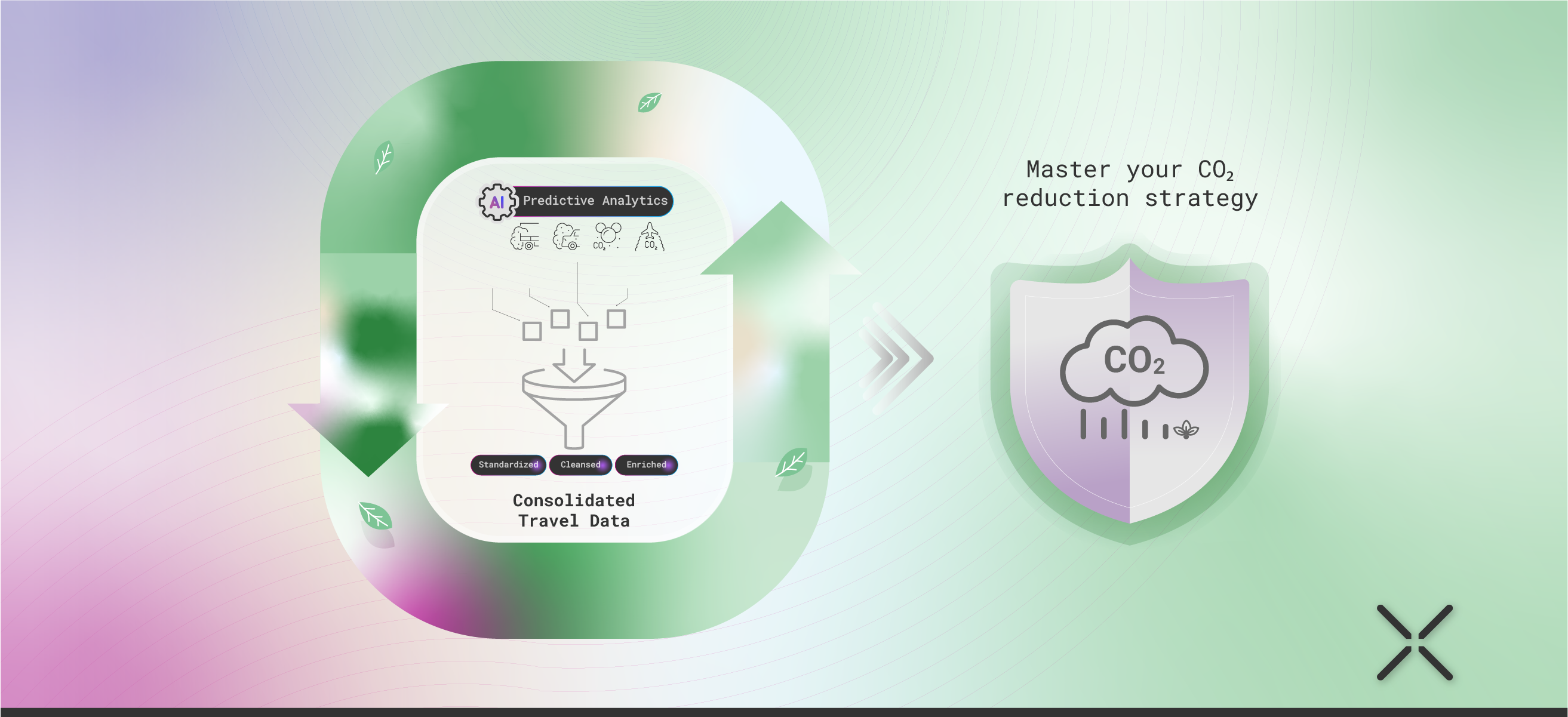
The What-If Machine: Using Travel Data & Predictive Analytics to Model Your Path to Net-Zero Targets
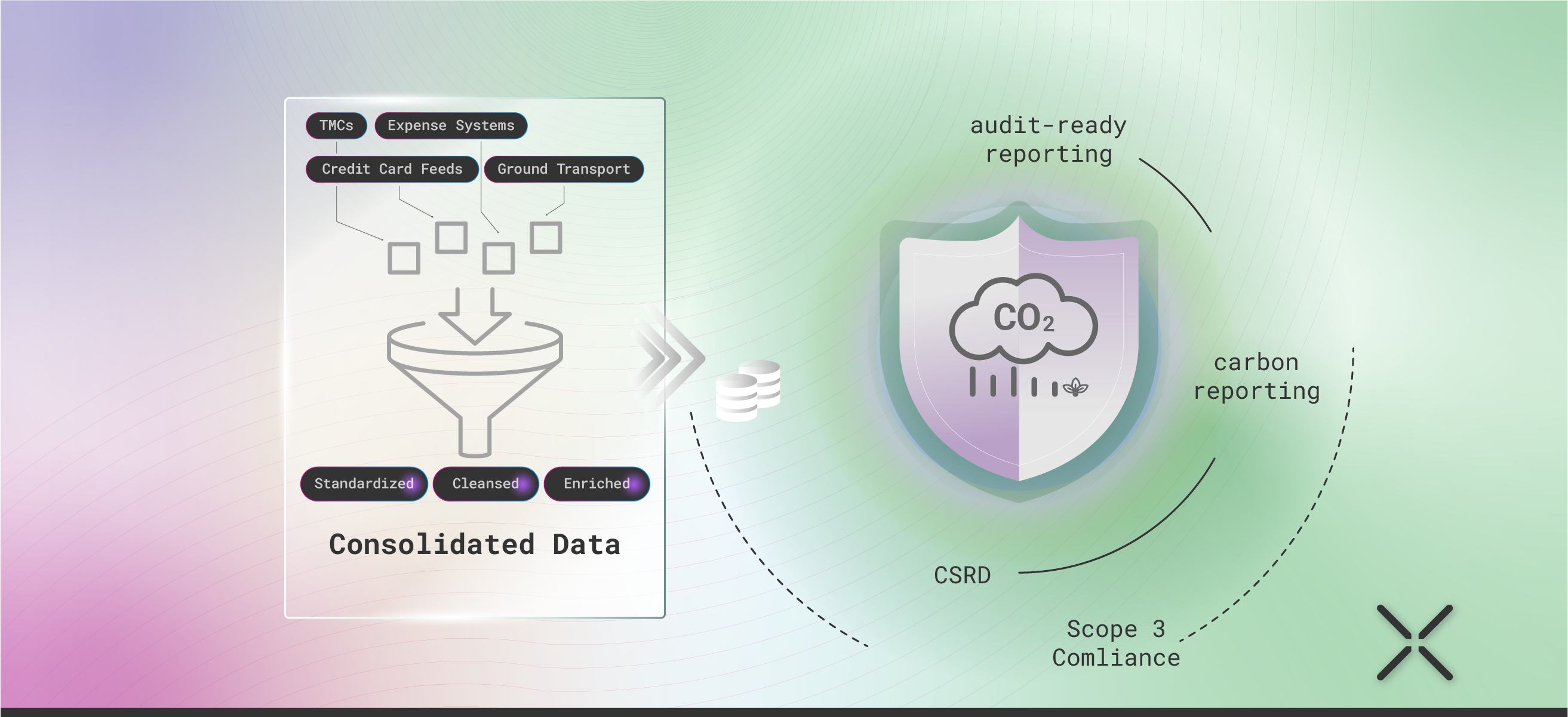
The Data Chain of Custody: Why Audit-Ready Reporting Begins with Consolidated T&E Data
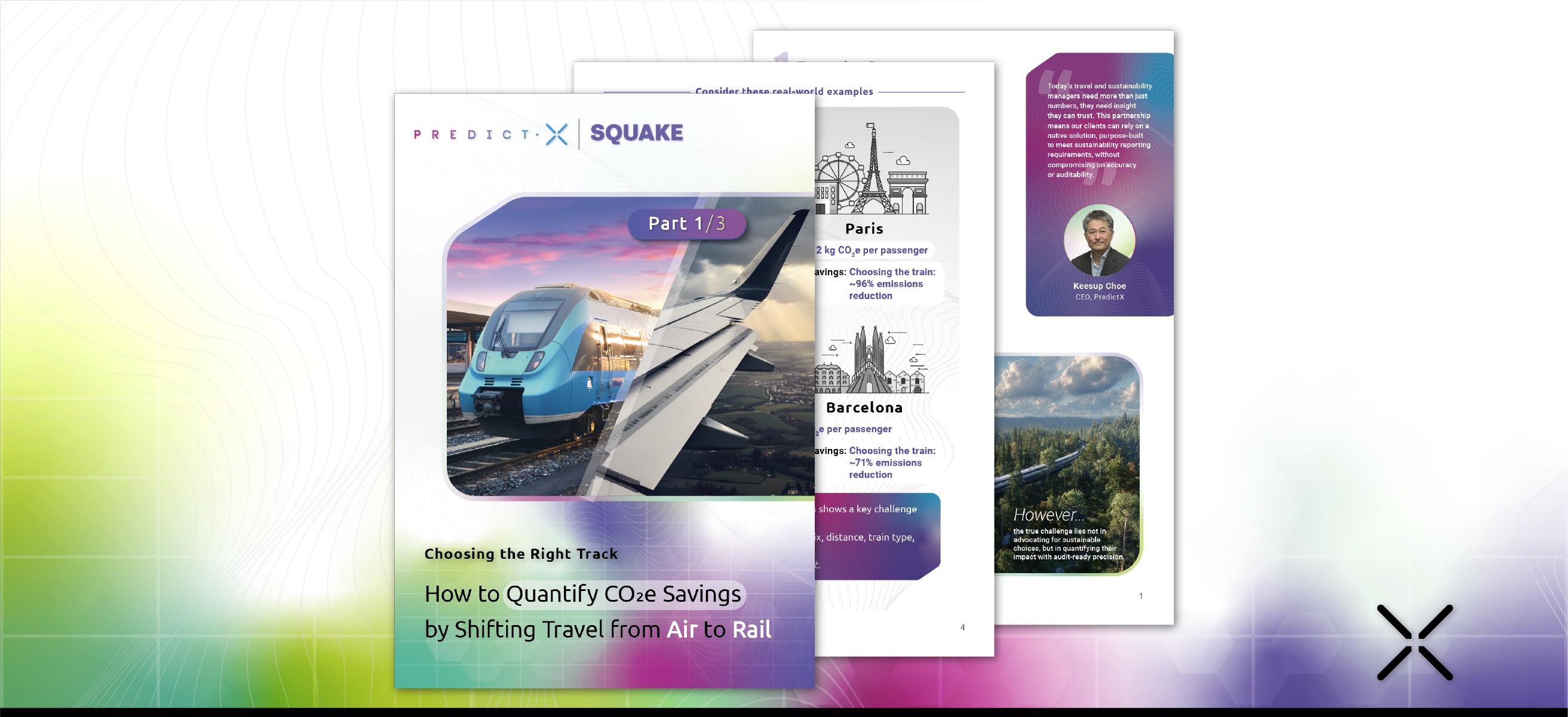
PredictX x SQUAKE: Quantifying CO₂e Savings from Air-to-Rail Modal Shift for Audit-Ready CSRD and Scope 3
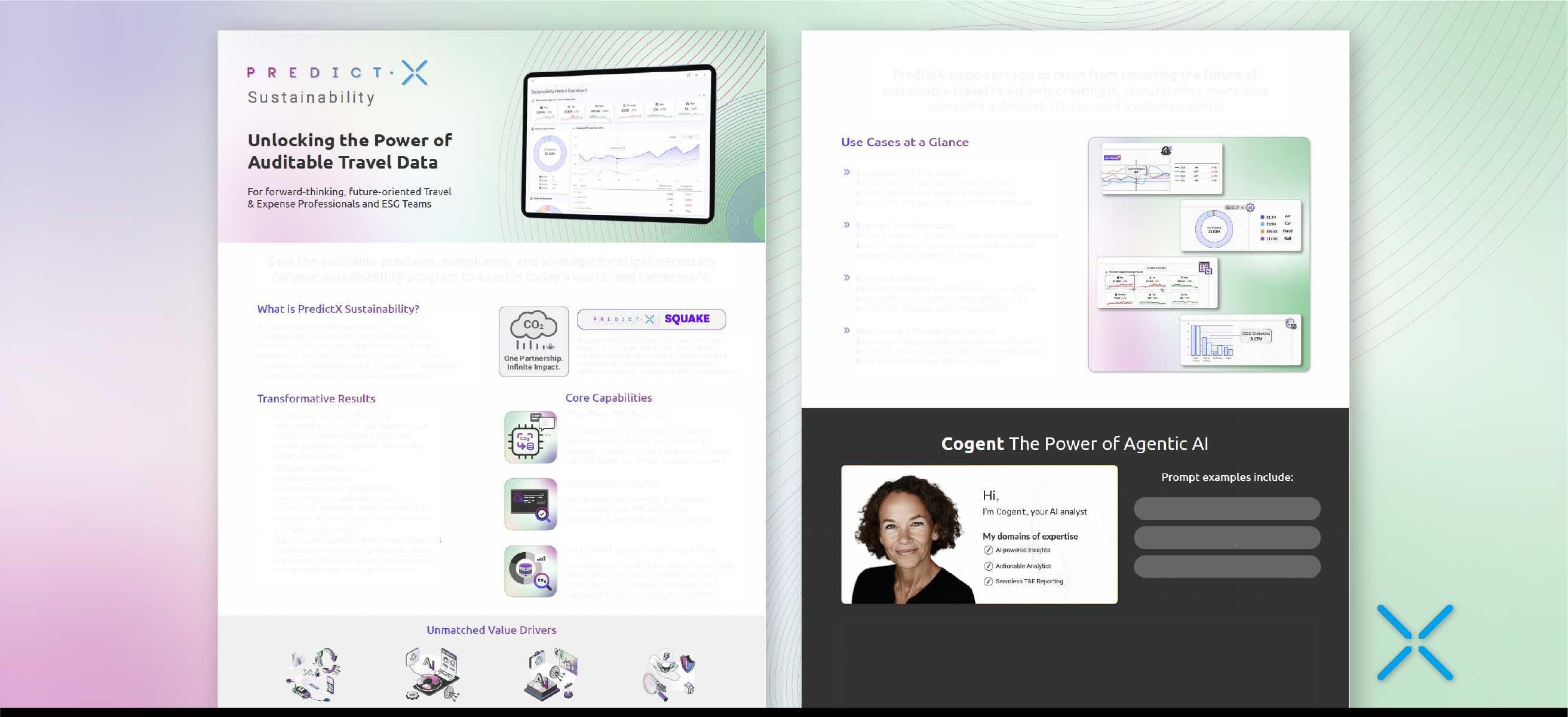
Failing Audits? Get the PredictX Product Sheet: The Path to Auditable Corporate Travel Emissions

The Scope 3 Mandate: Why CSRD Reporting Turns Business Travel Emissions into a Boardroom Issue
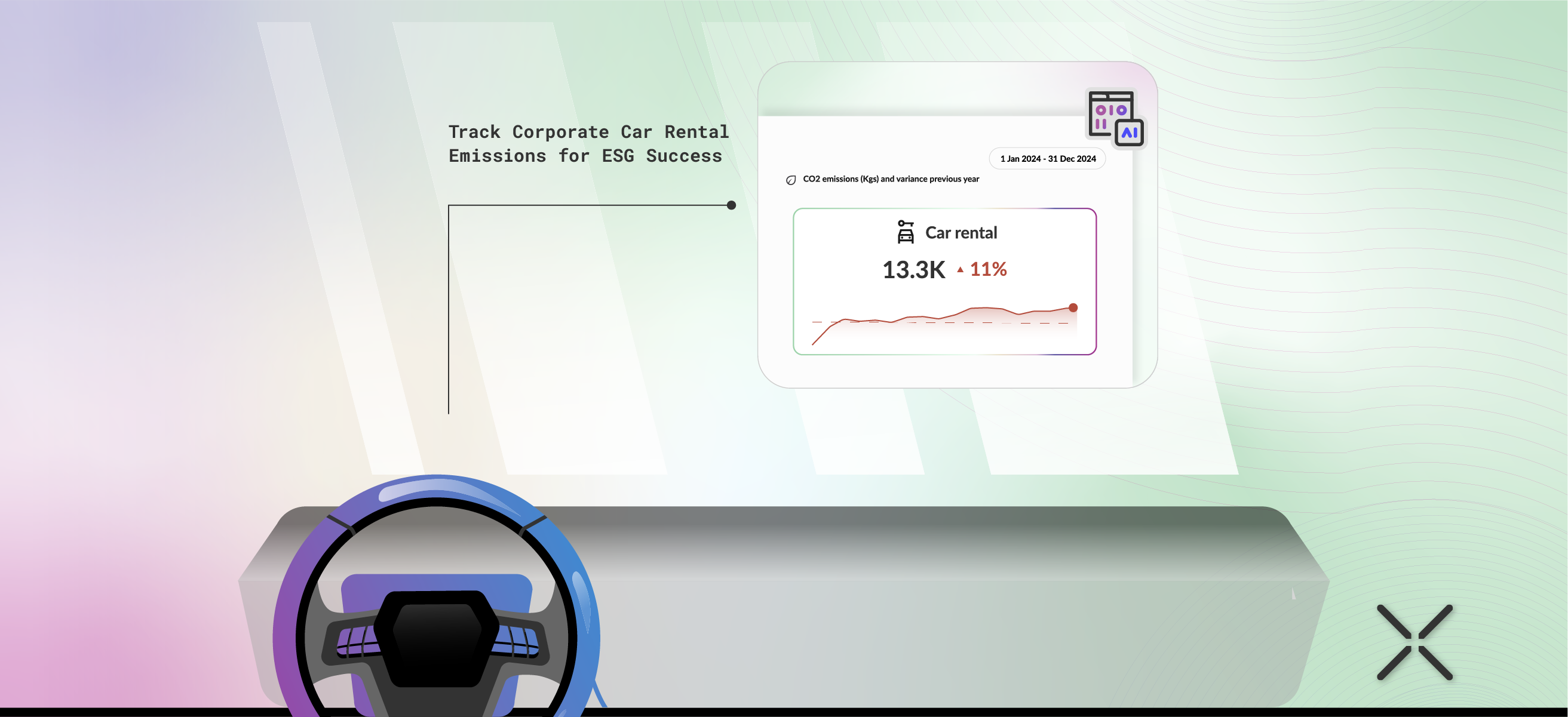
Putting Your Car Rental Emissions in the Driving Seat: A Smarter Approach to Sustainability
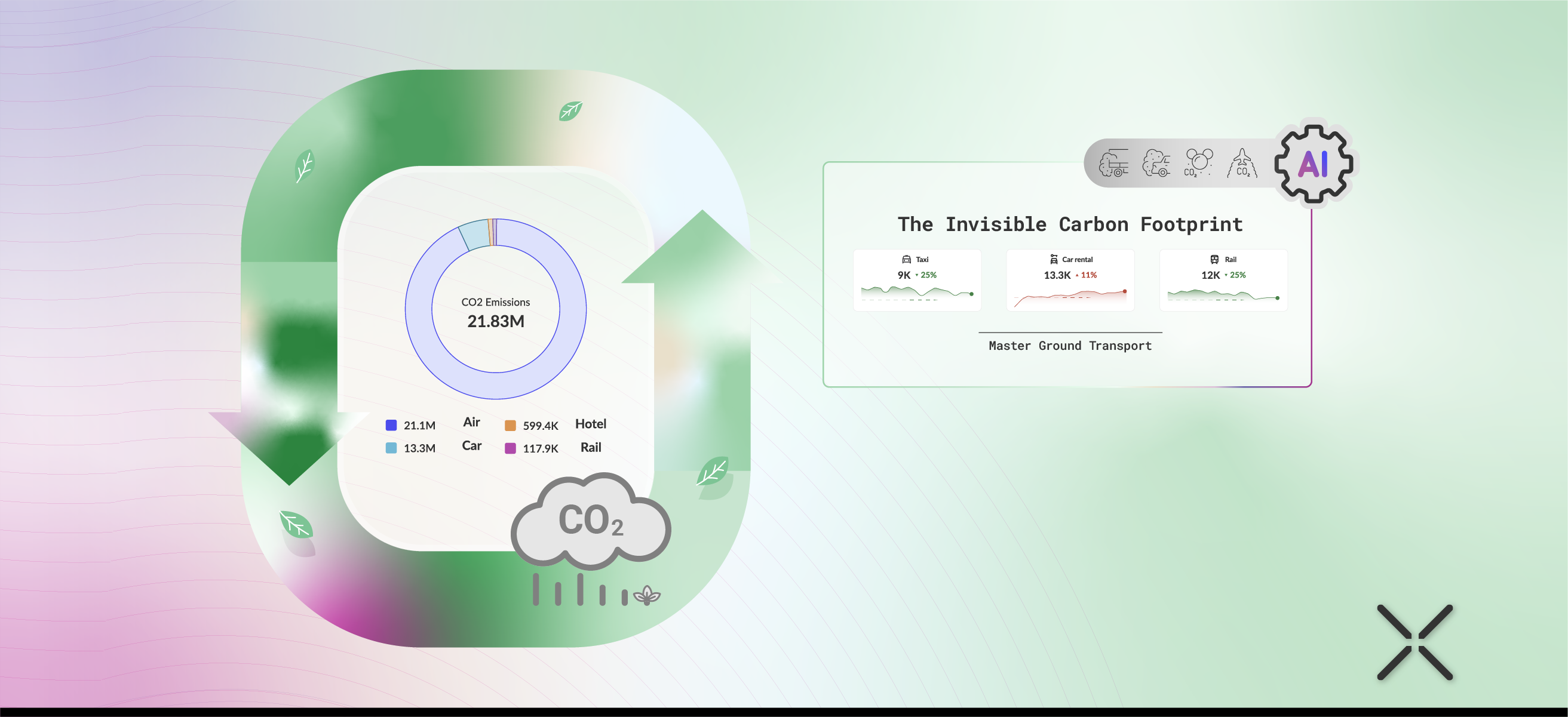
Beyond Flights: Your Guide to Tracking and Reducing Ground Transport Emissions
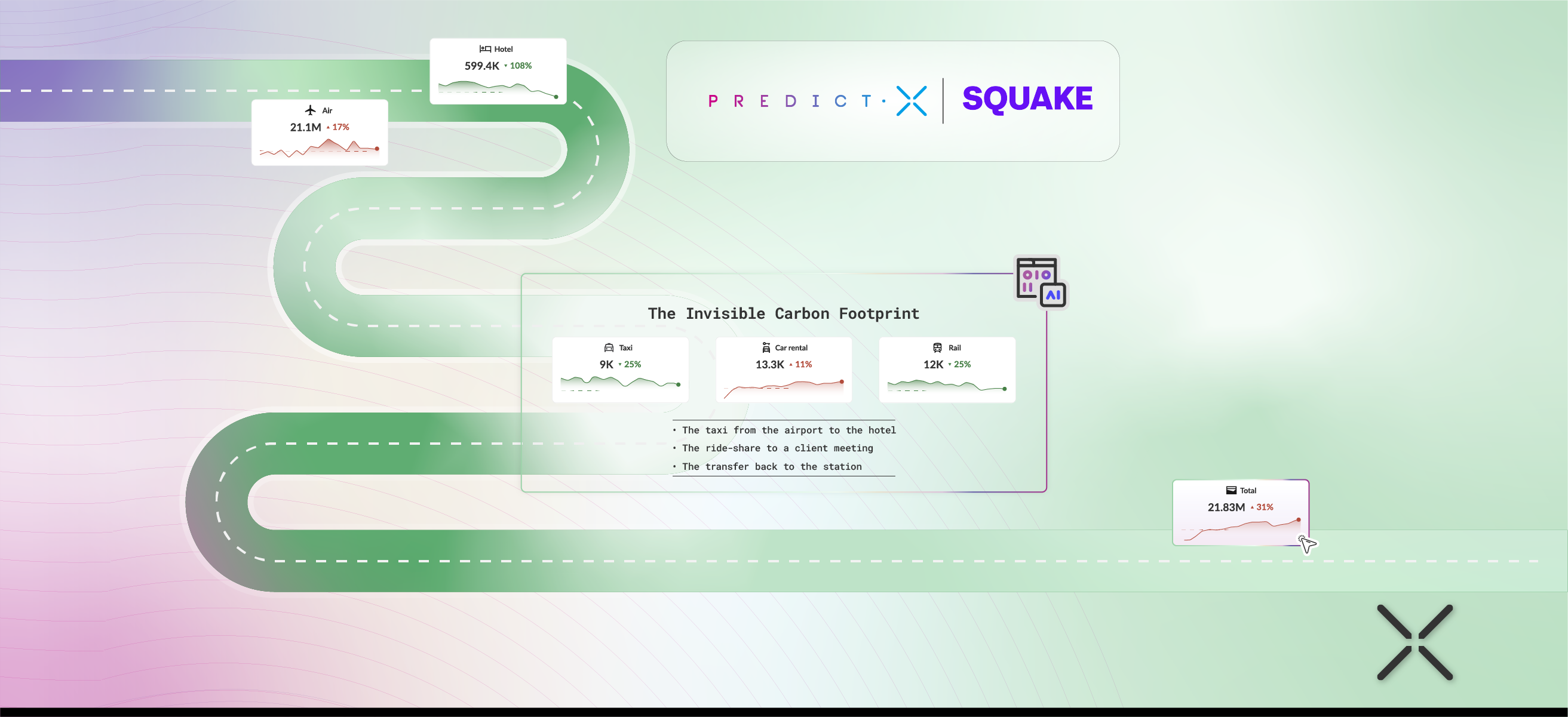
The Invisible Carbon Footprint: Why Your ESG Reporting Is Incomplete
.webp)
The 2025 Playbook for Net-Zero Business Travel by PredictX & SQUAKE: Your 4-Step Guide to Actionable Sustainability
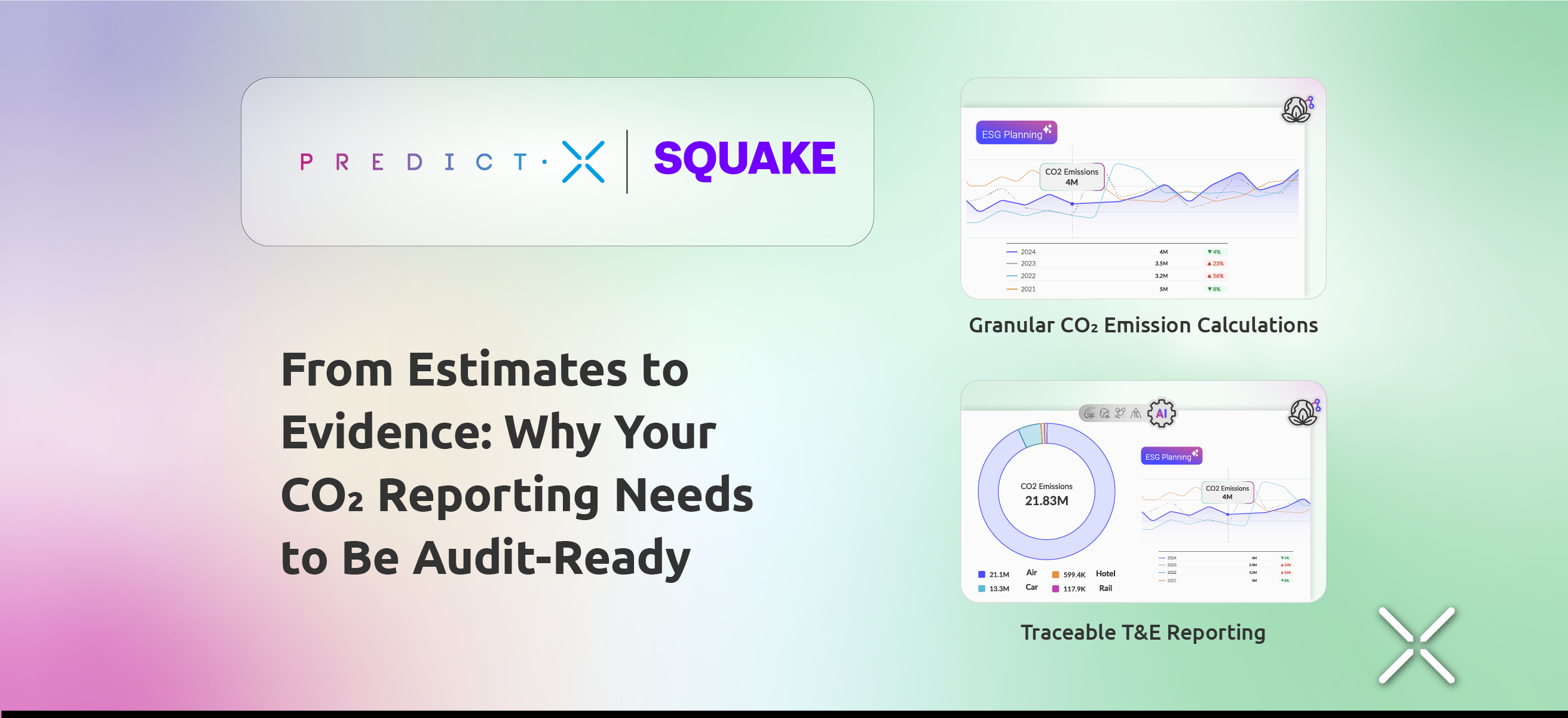
From Estimates to Evidence: PredictX x SQUAKE for Audit-Ready CO₂ Reporting
%20(23).png)
PredictX for Sustainability
.png)
How To Promote Sustainability and Calculate Your Company's Carbon Footprint
%20(1).png)
How PredictX is Pioneering the Use of AI for Corporate Travel Sustainability
.png)
Adhering to the CSRD: Shaping the Future of Corporate Travel Sustainability with PredictX

Unveiling PredictX’s Internal Carbon Pricing Tool: A Transformative Leap for Business Travel Sustainability
