

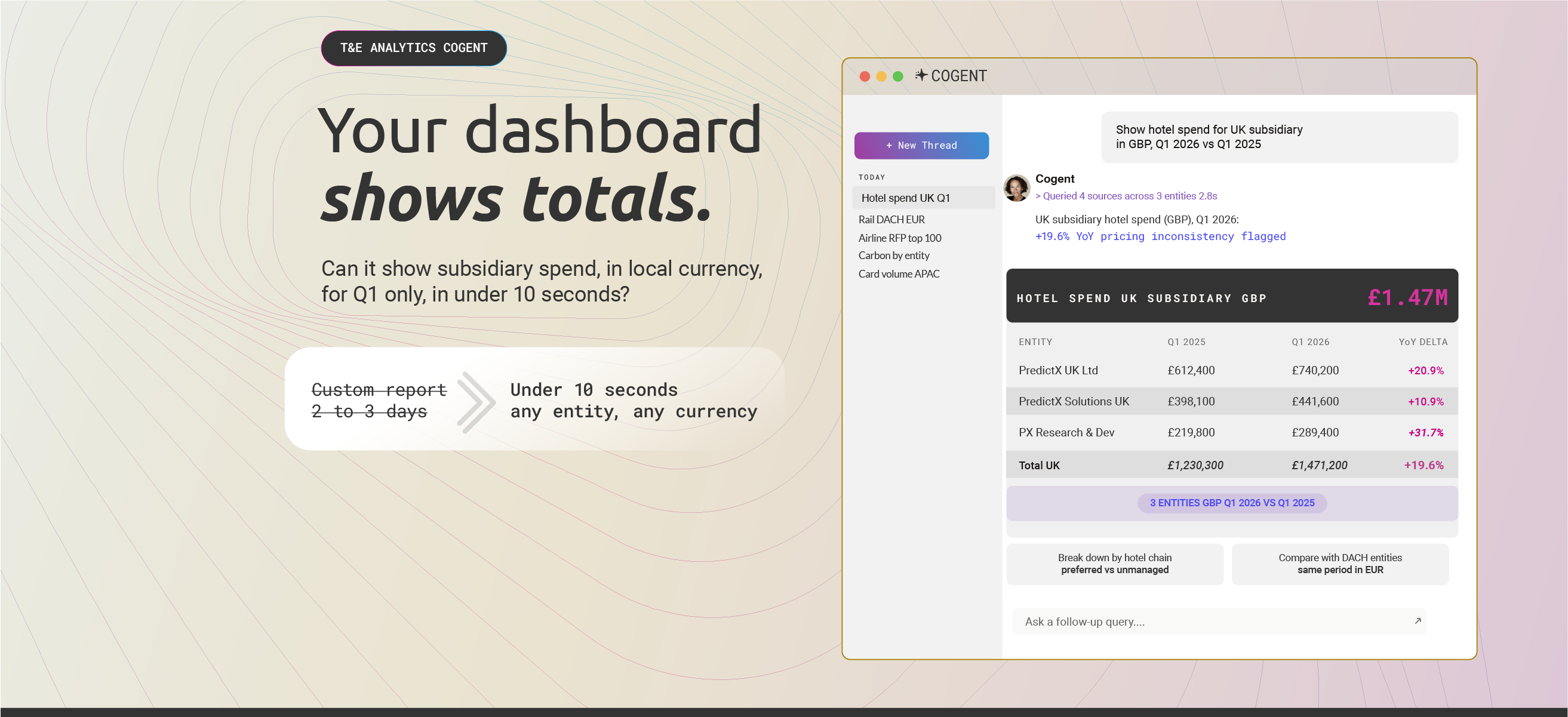
Travel managers today are under pressure to do far more than produce monthly reports. They need to improve travel and expense reporting, strengthen corporate travel compliance, reduce fraud, optimize supplier performance, and support sustainability reporting across fragmented travel, card, booking, and expense systems. Manual workflows slow every one of those decisions down. Built for modern travel and finance leaders, PredictX and Cogent support travel and expense management, travel and expense data analytics, and trip analytics at enterprise scale.
That challenge matters even more now because business travel volumes and financial scrutiny are rising at the same time. According to the GBTA Business Travel Index outlook and 2025 forecast, global business travel spending reached roughly $1.47T in 2024 and is forecast to rise to $1.57T in 2025. Modern programs need faster insight, stronger controls, and more audit-ready reporting.
Definition: Agentic AI is an AI system that can plan, execute, and iterate on multi-step work, such as consolidating travel and expense data, running checks, and generating decision-ready outputs without waiting for manual intervention.
Table of contents
- What’s changing in travel and expense management in 2026?
- How does manual T&E management compare with agentic AI travel management?
- How does agentic AI optimize T&E reporting efficiencies?
- Can AI improve vendor performance and supplier partnerships?
- Why use a reporting agent for complex travel data analysis?
- How does continuous air sourcing replace traditional airline RFPs?
- Is real-time fraud detection possible with DetectX?
- How do sustainability managers track audit-ready carbon intelligence?
- Can Rubicon automate strategic sourcing and RFP response analysis?
- Frequently asked questions
What’s changing in travel and expense management in 2026?
Agentic AI for T&E is shifting travel and expense management from periodic reporting to continuous program control. Instead of waiting for dashboards, analysts, or quarterly reviews, travel managers can query consolidated travel and expense data conversationally, detect risks earlier, and act faster on savings, sourcing, and compliance.
Traditional travel and expense management systems rely on fragmented data sources, static dashboards, and delayed reporting cycles. That leaves leaders with limited visibility into what is actually happening across air, hotel, rail, card, and expense activity.
Cogent changes that model by turning fragmented travel data into immediate, decision-ready insight. In practice, that means moving away from static dashboards toward a workspace where travel managers can query program performance, investigate anomalies, and act on savings opportunities as they emerge. The shift is explored in more detail in PredictX resources such as an overview of Cogent agentic AI for travel and expense management, the Cogent AI reporting product sheet for travel and expense teams, and a deeper look at the agentic AI revolution in T&E reporting and expense audit.
“The competitive edge is not more reporting. It is fewer reporting bottlenecks and more decisions per week.” - PredictX

How does manual T&E management compare with agentic AI travel management?
Agentic AI travel management outperforms manual programs by replacing spreadsheet consolidation with continuous travel and expense data analytics. Manual workflows create lag, errors, and blind spots; agentic workflows deliver faster answers, stronger audit coverage, and sourcing-ready views for modern travel and expense management teams.
Manual programs mostly measure the past. Agentic AI measures what is changing now and can recommend the next best action across travel and expense reporting, corporate travel compliance, supplier strategy, and corporate travel risk management.
That shift is central to how PredictX describes the future of the travel manager in the T&E manager of tomorrow using Cogent agentic AI and this interview on how Keesup Choe sees the future of Cogent and agentic AI in corporate travel.
How does agentic AI optimize T&E reporting efficiencies?
Agentic AI optimizes T&E reporting by turning consolidated travel and expense data into daily savings, compliance, and performance decisions. With travel reporting and predictive analytics, teams move from reactive reporting to proactive financial control, uncovering hidden savings and cost-avoidance opportunities that manual reviews often miss.
Definition: T&E reporting is the process of consolidating and analyzing travel and expense data to measure spend, compliance, traveler behavior, and program performance.
The Performance and Savings Manager becomes the detective of the travel program. Instead of relying on rigid dashboards, Cogent enables conversational travel and expense reporting, travel data and predictive analytics, trip analytics, and total trip analysis across multiple sources. That approach comes through clearly in six powerful Cogent use cases for T&E reporting and travel data, how agentic AI powers T&E reporting with RAG, and the PredictX guide to prompt engineering for T&E management.
Use case:
The Performance and Savings Manager is tasked with uncovering cost efficiencies that legacy processes consistently miss. By leveraging predictive analytics, these managers move from tedious calculations to strategic financial control.
The Edge:
- Cost Optimization Analysis: “Act as a cost optimization consultant. Analyze our annual global card spend for FY25 vs FY24, including all non T&E categories, and identify the top three areas where we can reduce spend by >10% without impacting productivity.”
- YoY Expense Variance: “Compare the total expense spend submitted from October 2024 to September 2025 against the same period last year; breakdown by sub category.”
- Sunk Cost Diagnostic: “Identify the top 5 reasons for travel cancellations in 2025; calculate the total ‘Sunk Cost’ for each reason and compare it to the total cancellation spend in 2024.”
- Policy Exception Audit: “Drill down into our departmental car rental spend for last month; compare it to the rolling 6 month average and flag any department where ‘Premium’ car class usage exceeded 20% of their total bookings.”
- Missed Savings KPI: “Which air travel compliance KPI category in 2025 has the highest estimated missed savings, and what does this imply for our 2026 budget recalibration?”
- Geographic Spend Concentration: “Identify the top 5 vendor cities with the highest credit card spend concentration in the past 6 months; correlate this with our office locations to identify new local negotiation opportunities.”
- Regional Budget Variance: “Calculate the total travel spend for Point of Sale Germany for FY25 (Oct 1 2024 to Aug 31 2025) and provide a YoY percentage variance against the same period in FY24.”
Outcome: 3%–5% reduction in total travel and expense spend plus a 5X productivity boost by shifting work from calculation to strategy.
“Cogent turns travel and expense reporting into a daily savings engine.” - PredictX
Can AI improve vendor performance and supplier partnerships?
Yes, AI improves vendor performance by exposing negotiated rate leakage, city cap issues, and supplier truth gaps hidden across structured and unstructured travel data. With travel reporting and predictive analytics, vendor performance managers can compare booked rates versus targets continuously and negotiate from evidence instead of quarterly averages.
Definition: A city cap is a target maximum hotel rate, often set by market and currency, used to control hotel spend and guide supplier negotiations.
Vendor management is no longer seasonal. With consolidated travel and expense data, travel managers can track actual booked rates, preferred share, ADR, and volume shifts daily. That makes travel and expense data analytics far more valuable during supplier reviews, rate negotiations, and broader procurement strategy discussions.
Use case:
Cogent lets Vendor Performance Managers monitor actual booked rates against city caps daily, so they can identify where volume is shifting and negotiate from a position of truth.
The Edge:
- Negotiated Rate Leakage: “Act as a lead negotiator. Rank the top 10 hotels in São Paulo by total spend and ADR for YTD 2026; compare these against our FY25 negotiated rates to calculate the total leakage from non cap compliance.”
- City Cap Compliance: “Compare our 2025 actual booked room rates versus target city caps in CHF for our top 20 global destinations; highlight any property that exceeded the cap in >30% of its transactions during Q2.”
- Historical Posting Behavior: “Scan our historical posting behavior and identify any GL accounts where expected monthly lease expenses or subscription entries are absent for Q3 2025 compared to the same period in 2024.”
- Carrier Shift Impact: “Evaluate the commercial impact of switching our primary carrier for the London-NYC route by analyzing historical price variance and proposed RFP bid structures for FY26.”
- Hotel Brand Breakdown: “Provide a breakdown of the top 5 hotel brands used by employees in APAC since April 2025; include total spend, ADR, and a YoY comparison of ‘Preferred’ vs ‘Non-Preferred’ usage.”
- Business Unit Volume: “¿Qué unidad de negocio en el LC AR tiene el volumen más alto de gasto en viajes para el segundo trimestre de 2025 en comparación con el primer trimestre?”
Outcome: Bridge the truth gap and unlock 10%+ improvement in RFP pricing by revealing spend that manual tools often miss.
“Negotiations change when you bring continuous benchmarking instead of quarterly averages.” - PredictX
Why use a reporting agent for complex travel data analysis?
A reporting agent removes reporting bottlenecks by turning raw travel and expense data into structured answers instantly. Instead of waiting for data teams to build dashboards, travel managers can query hierarchy, cost center, project code, traveler, and route dimensions on demand and accelerate decision-making with travel data and analytics.
Definition: Travel data and predictive analytics combines historical and near-real-time travel data to forecast trends, detect anomalies, and support better sourcing, policy, and budget decisions.
PredictX explains in how agentic AI powers T&E reporting with RAG that Cogent does not simply retrieve data. It understands intent and synthesizes information from a consolidated knowledge base. That is why a reporting agent is valuable for complex T&E questions that would otherwise trigger repeated report rebuilds.
For teams building better prompt libraries, the Cogent prompt engineering guide for T&E management and this guide on what to ask your AI prompts in Cogent are useful supporting assets.
Use case:
This use case is built for speed: pivot dimensions instantly, validate data quality, and generate structured outputs without rebuilding reports.
The Edge:
- Visual Spend Extrapolation: “Re-imagine our T&E reporting: Create a visualisation with a matrix table of the top 50 city pairs by ticket count alongside a line graph of monthly spend extrapolated for the next six months.”
- Metadata Integrity Audit: “Determine the total spend from card transactions where vendor metadata is missing for FY25; show this as a percentage of total spend and identify the most frequent offending cardholders.”
- Cross-Category Spend Table: “Generate a structured table of travel spend by area_code (5650, 545W, 420S) for the period 1 Oct 24 to 30 Sep 25; include columns for Air Spend, Hotel Spend, and Rail Spend in HKD.”
- Departmental Trip Length Analysis: “Analyze employee trip lengths by department for the last 12 months. Correlate average trip duration with total spend and highlight departments with >20% spend growth YoY.”
- Multilingual Cost Center Deep-Dive: “Részletezd a listát cégekre és költséghelyekre, összehasonlítva a 2025-ös és 2024-es évközi (YTD) adatokat, kiemelve a legnagyobb eltéréseket.”
- Transaction-Level Policy Audit: “Extract transaction level data for corporate hotel bookings for H1 2025; include check in/out dates, locations, and ADR, and flag any transaction that violates the current regional travel policy.”
Outcome: 90% faster insights and far fewer reporting bottlenecks.
“If it takes weeks to answer a travel question, you do not have reporting. You have reporting debt.” - PredictX
How does continuous air sourcing replace traditional airline RFPs?
Continuous air sourcing replaces annual airline RFPs with always-on airline pricing intelligence, airfare benchmarking, and contract optimization. Instead of renegotiating once a year, Air Contract Managers can monitor corporate air pricing trends, predictive air spend analysis, and real-time airline contract management across priority routes continuously.
Definition: Continuous air sourcing is a procurement approach in which air contracts are monitored and optimized continuously using real-time benchmarking, market share analysis, and forecasting.
This new category includes continuous air sourcing, continuous corporate travel sourcing, automated air travel procurement, dynamic air sourcing strategy, airfare benchmarking tool, airline contract negotiation intelligence, corporate air travel program monitoring, and real-time airline contract management.
Continuous air sourcing works because it gives travel managers a live view of contract performance instead of forcing them to wait for an annual review cycle. With air contract management for corporate travel programs and continuous air sourcing using travel and expense data, teams can benchmark fares, track market share shifts, and spot missed savings earlier. For a deeper look at how this model works in practice, the complete guide to Air Sourcing Navigator for corporate travel managers shows how agentic AI supports better negotiation timing and stronger contract visibility.
Use case:
Air Sourcing Navigator enables continuous monitoring of air spend versus contract, improving negotiation timing and reducing missed savings from non-preferred usage.
The Edge:
- NDC vs GDS Benchmark: “Analyze the route London to Munich for FY25: Provide a breakdown of ticket counts and average costs, specifically comparing Lufthansa NDC bookings versus traditional GDS bookings.”
- Lost Savings Diagnostic: “Audit our non refundable air cancellations for POS UK in YTD 2026; identify the total lost spend and list the top three reason codes driving these cancellations compared to 2025.”
- Predictive Booking Window: “Review our historical air ticket prices for PEK-MUC-PEK across FY24 and FY25; identify any seasonal anomalies and suggest the optimal booking window to minimize cost for FY26.”
- Supplier Meeting Preparation: “Prepare me for a Lufthansa QBR: Summarize our total spend, top 5 routes, NDC adoption rate, and the total value of ‘Missed Savings’ from using non preferred carriers in 2025.”
- Volume Change YoY: “Top 10 bi directional city pairs by number of tickets issued for YTD 2026. Bucket these tickets into: 0 - €1000, €1001 - €2000, €2001 - €3000, > €3001 and compare volume change YoY.”
- Price Volatility Analysis: “Identify our top 10 bi directional city pairs with the highest price variance in 2025; show the carrier with the most stable pricing vs the one with the highest volatility.”
- Global Ticket Mean Variance: “Calculate the average ticket price for air travel in 2025 by dividing total gross amount by total tickets issued; show a monthly trend and flag months with a >10% variance from the mean.”
Outcome: 3X faster sourcing decisions and always-on optimization.
“Search volume may be low, but the category is real: continuous air sourcing is the process shift.” - PredictX
Is real-time fraud detection possible with DetectX?
Yes, real-time fraud detection is possible when expense auditing is automated across booking, card, and expense data in a Full Story audit. DetectX supports AI expense audit, automated expense auditing, expense fraud detection, fake receipt detection, duplicate expense detection, and continuous transaction monitoring before reimbursement.
Definition: Automated expense auditing uses analytics, anomaly detection, and policy logic to review expenses continuously rather than sampling claims after reimbursement.
This matters because fraud exposure is not theoretical. The ACFE 2024 occupational fraud report reports a median loss of $145,000, with many cases exceeding $1 million. As receipt manipulation and AI-generated documentation become easier to produce, sampling alone is no longer enough.
Teams looking to reduce audit lag and improve pre-reimbursement controls can explore automated expense auditing with DetectX, learn how AI-generated fake receipt detection in expense audit strengthens review quality, and compare audit sampling versus AI expense auditing when evaluating modernization options.
DetectX is especially relevant for finance teams looking for expense management software, corporate card misuse prevention, proactive fraud prevention, behavioral fraud detection, receipt authenticity checks, automated approval workflows, pre-submission audit, pre-approval audit, post-payment audit, procurement leakage detection, global tax and VAT compliance, and manual audit workload reduction.
Use case:
The Expense and Card Auditor provides an automated guardrail. DetectX uses a Full Story audit integrating booking, card, and expense data to identify sophisticated fraud and behavioral patterns in real time and streamline investigations globally.
The Edge:
- Behavioral Fraud Identification: “Analyze employee spend patterns over the last 24 months to identify signs of behavioral fraud; specifically, flag individuals with a high frequency of small, out-of-policy ‘digital wallet’ payments that consistently bypass traditional receipt requirements.”
- Receipt Authenticity Audit: “Audit all high-value receipts submitted in Q3 2025 using AI Vision; identify any documents with a >95% probability of being AI-generated or forged, and cross-reference them against the vendor’s known invoice templates.”
- Procurement Leakage Vetting: “Identify procurement leakage for FY25 by flagging card transactions at vendors that aren’t properly classified by MCCs; re-categorize these using independent merchant vetting to find spend that should have been routed through preferred channels.”
- Missing Metadata Fraud Check: “Analyze AMEX card transactions for our Spanish entities where the vendor name is empty or null; cross reference these against Concur expense reports for FY25 to identify potential fraud.”
- Ancillary Tip Audit: “Apply the Tip Audit model to all Q3 meal and taxi expenses; automatically reject any tip exceeding 20% and identify travelers who consistently pad expense reports with ancillary junk fees.”
- Retail Spend Misuse: “Flag any traveler whose corporate card spend on ‘Retail’ categories exceeded €2,000 in 2025 while they were not on an active business trip; provide a list of dates and merchant names.”
Outcome: Catch 5X more fraud pre-reimbursement, improve policy compliance, and cut manual review time by 80%–90%.
“If you only audit what you can sample, you will miss what is actually hurting you.” - PredictX
How do sustainability managers track audit-ready carbon intelligence?
Sustainability managers track audit-ready carbon intelligence by unifying travel and transport data into granular, route-level CO₂ emission calculations. That improves travel carbon footprint tracking, Scope 3 reporting, ESG reporting system quality, and CSRD sustainability reporting readiness while supporting more defensible business travel emissions disclosures.
Definition: Scope 3 emissions are indirect emissions across a company’s value chain, and business travel is commonly included within that category.
As sustainability expectations grow, travel programs need more than broad estimates. The GHG Protocol Scope 3 standard, the European Commission guidance on CSRD sustainability reporting, and the ISO 14083 transport emissions standard all point toward more defensible, traceable carbon reporting.
Audit-ready carbon reporting depends on more than emissions estimates. It requires complete travel data, a defensible methodology, and a clear chain of custody across reporting inputs. That is why many teams are investing in a corporate travel sustainability solution for ESG and Scope 3 reporting, supported by travel data and predictive analytics for net-zero business travel targets and audit-ready reporting and data chain of custody in T&E. As reporting expectations rise, CSRD Scope 3 business travel emissions compliance is becoming a more practical operational priority for travel and sustainability leaders.
That means carbon reporting, business travel emissions analysis, automated carbon reporting, travel ESG, ESG in business travel, air vs rail CO₂ analysis, and sustainable corporate travel all depend on complete travel data and auditable methodologies.
Use case:
Sustainability Managers use Cogent to transform environmental goals into measurable action by tracking carbon hotspots, modal shift opportunities, and progress toward net-zero targets.
The Edge:
- Board Reduction Tracker: “Calculate our total CO₂ emissions for Q3 2025; provide a breakdown by Air, Hotel, and ground transportation, and compare these against our board approved reduction target.”
- Short Haul Modal Shift: “Identify our top 10 short haul air routes (<500km) in Europe for YTD 2025; calculate the potential CO₂ reduction and the total cost impact if 50% of these were shifted to Rail.”
- Business Value Inefficiency: “Identify business travel inefficiencies for Q3 2025: List city pairs where total spend increased by >15% YoY.”
- Vehicle Net Cost Comparison: “Compare the net cost of our internal combustion engine vehicles (fuel + lease) against the net cost of our battery electric vehicles (charging + lease) in Germany for Sep 2025; provide a per-unit breakdown and total savings.”
- Rail Replacement Reduction: “Analyze travel spend for Poland YTD 2026; identify the top 5 air routes that could be effectively replaced by rail and calculate the total CO₂ reduction for the year.”
- Emission Share Baseline: “Show the CO₂ emission share in FY25 from intercontinental, domestic, and continental flights as a percentage of total emissions; compare this to the FY24 baseline.”
Outcome: Move from approximation to audit-ready reporting and accelerate ESG strategy.
“You do not have a travel ESG strategy until your carbon reporting is audit-ready.” - PredictX
Can Rubicon automate strategic sourcing and RFP response analysis?
Yes, Rubicon automates strategic sourcing by ingesting unstructured supplier responses and producing an explainable scoring matrix across price, service, and risk criteria. That reduces manual spreadsheet work, accelerates the RFP process, and helps procurement teams compare bidders side by side without losing auditability.
Definition: The RFP process is a structured method for collecting and evaluating supplier bids across price, implementation, service levels, risk, and commercial terms.
AI is also reshaping how procurement teams evaluate supplier proposals. Instead of manually comparing bids across multiple spreadsheets, tools like Rubicon help sourcing teams analyze commercial terms, pricing structures, implementation timelines, and risk clauses in a structured way. By automating much of the comparison process, procurement leaders can focus more on supplier evaluation, negotiation strategy, and long-term sourcing decisions rather than administrative analysis.
Use case:
Rubicon acts as an AI procurement co-pilot, objectively scoring suppliers, surfacing hidden risks, and producing auditable comparisons for strategic sourcing and procurement strategy.
The Edge:
- Liability Clause Delta: “Compare the liability clauses between Bidder A and Bidder B.”
- Data Security Vetting: “Which supplier has the strongest credentials for data security?”
- Implementation Support Summary: “Summarize the key differences in implementation support across all three proposals.”
- Commercial vs Technical Matrix: “Show me the ‘Best Technical’ vs. ‘Best Commercial’ side-by-side.”
- Absolute Lowest Cost: “Who is the cheapest Bidder?”
- Cost Discrepancy Forensic: “Why is Bidder A 20% cheaper than Bidder B? What exactly did they leave out?”
- Mean Cost Analysis: “What is the average cost across all bidders?”
- Bidder Cost Summary: “Please provide a summary of the costs from all bidders.”
- Fixed vs Variable Ratio: “Compare the fixed vs. variable cost ratio across all submitted proposals.”
- Aggregated Pricing Comparison: “Compare all the bidders in terms of pricing.”
- SLA Penalty Strength: “Who has the strongest penalty clauses if they miss their Service Level Agreements (SLAs)?”
Outcome: Expand sourcing capacity, save 40+ hours per RFP, and improve evaluation consistency.
“If your sourcing team is formatting spreadsheets, you are paying strategic people to do clerical work.” - PredictX
Conclusion: Why does the future belong to proactive T&E leaders?
The future belongs to Travel Managers who move from manual reporting to agentic execution. As travel patterns remain volatile and audit expectations rise, the modern T&E leader must combine travel and expense management, automated expense auditing, continuous sourcing, and audit-ready sustainability reporting in one operating model.
The era of manual data stitching, reactive dashboards, and approximate reporting is ending. What replaces it is not simply another BI layer. It is a new operating model where travel and expense reporting, expense fraud detection, strategic sourcing, corporate travel compliance, and carbon reporting all work from a shared, decision-ready data foundation.
Ready to move 5X faster? Schedule your ROI discovery call with Cogent.
Frequently asked questions
What is the primary benefit of Cogent agentic AI for T&E?
Cogent acts like a virtual full-time equivalent for travel and expense reporting by delivering instant, context-rich insight without adding headcount. It reduces reporting bottlenecks, improves compliance visibility, and helps teams identify missed savings faster than manual dashboards or fragmented data workflows.
How quickly can DetectX deliver ROI for automated expense auditing?
DetectX can deliver ROI quickly because it reduces fraud exposure and manual audit effort through continuous transaction monitoring and automated expense auditing. By connecting booking, card, and expense records in a Full Story audit, teams can catch more issues pre-reimbursement and improve policy compliance.
What does audit-ready carbon reporting mean for business travel emissions?
Audit-ready carbon reporting means your travel carbon footprint tracking is granular, traceable, and aligned to recognized methodologies. Instead of relying on broad estimates, it supports Scope 3 reporting, ESG disclosures, and transport emissions quantification using standards such as the GHG Protocol and ISO 14083.
Transform your T&E management today. Request a trial of Cogent today.
Unlock Your T&E Advantage: Subscribe to PredictX in Focus Newsletter
🔔 Stay Ahead! Follow Us on LinkedIn for the Latest Innovations and Feature Updates to Enhance Your Travel Management Experience!
Related Posts
.webp)
Cogent Wins 2025 BTS Europe Innovation Faceoff: Setting a New Benchmark for AI-Driven Travel & Expense (T&E) Solutions

How Cogent’s Agentic AI Revolutionizes T&E Reporting with RAG
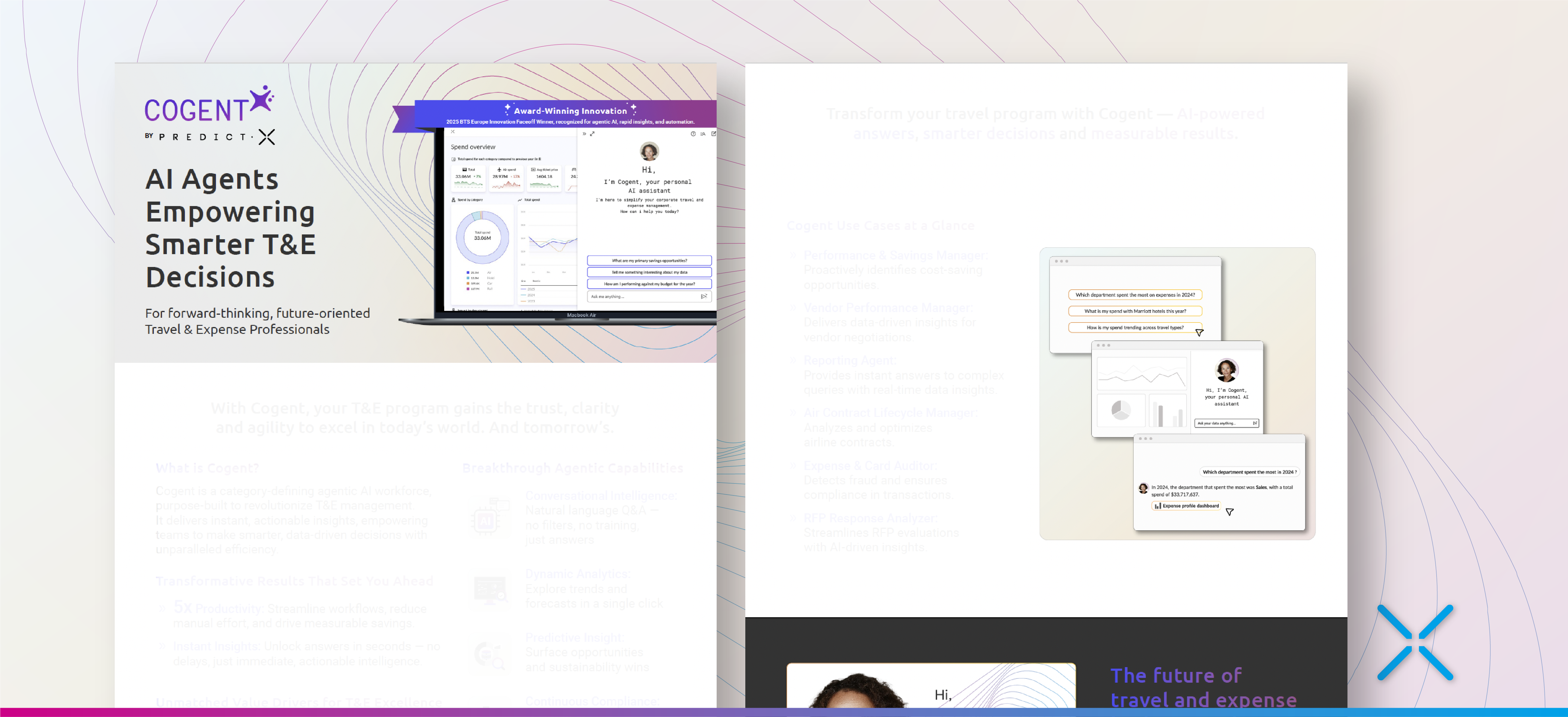
Product Sheet | Cogent - AI-Powered Travel and Expense (T&E) Reporting
Prompt Engineering for T&E: Mastering Cogent Agentic AI to Drive Savings

Transform Travel & Expense (T&E) Management with Cogent’s Agentic AI Solutions
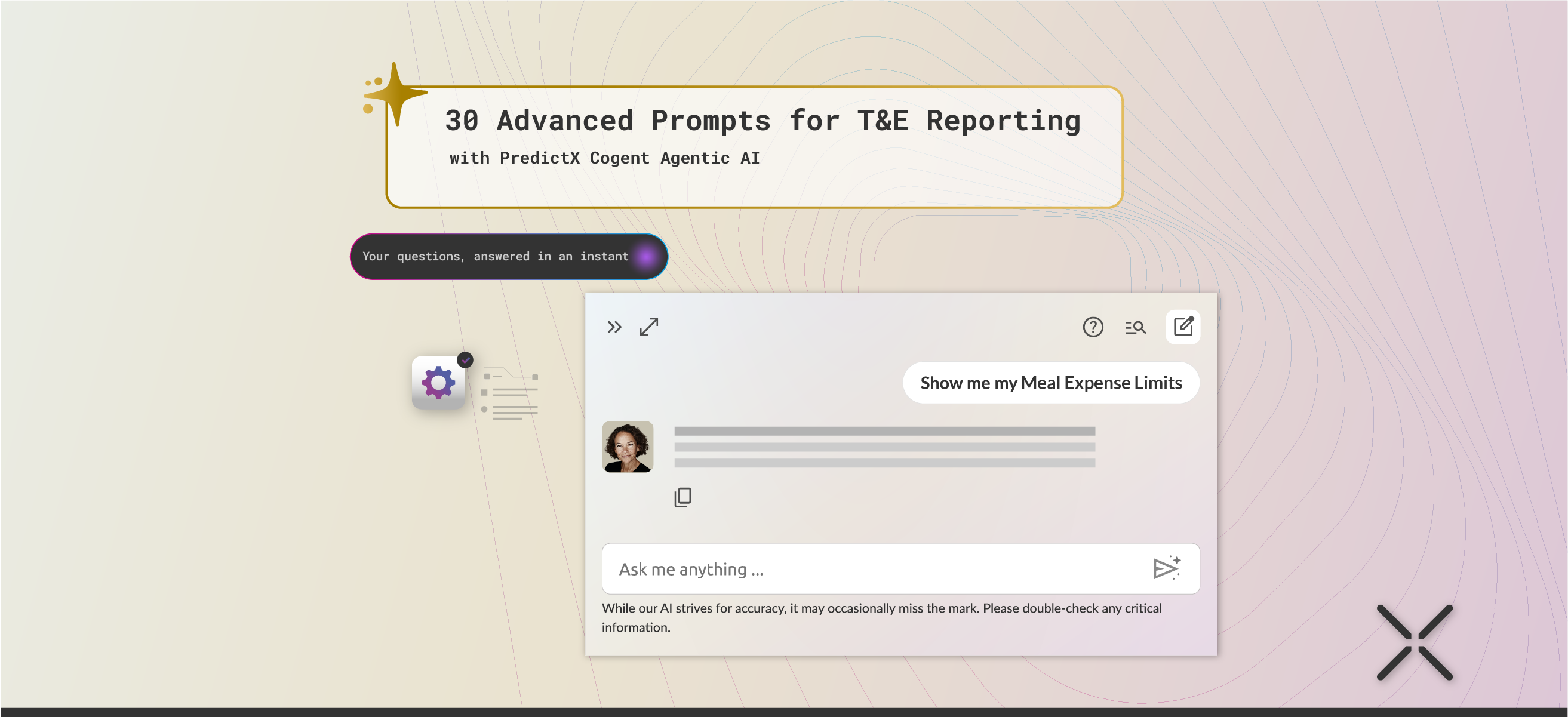
The Ultimate Guide: What to Ask Your AI for Smarter T&E Reporting | Cogent Agentic AI
.webp)
Beyond Dashboards: Cogent - The Agentic AI Revolution in T&E Reporting & Expense Audit
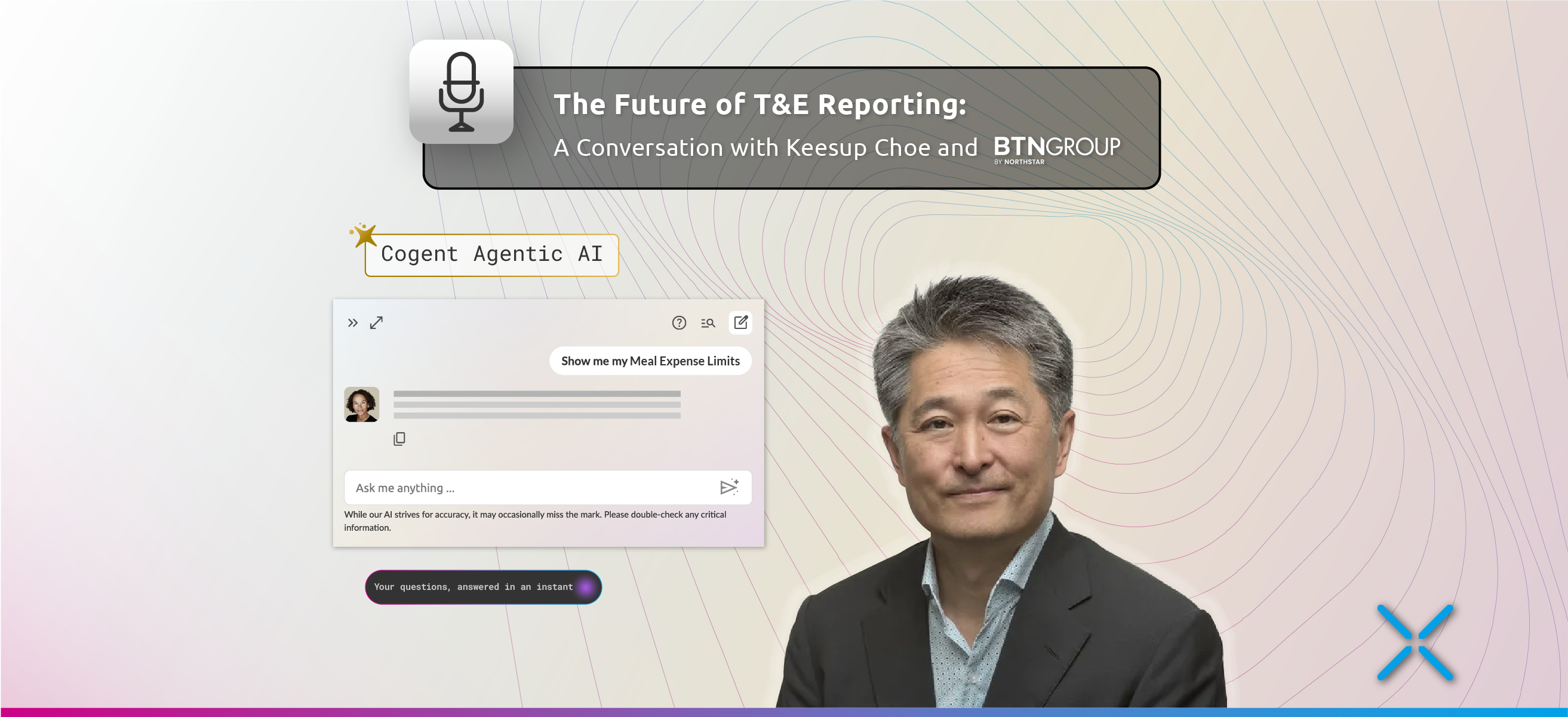
The Future of T&E Reporting: A Conversation with Our CEO and BTN Group | Cogent Agentic AI
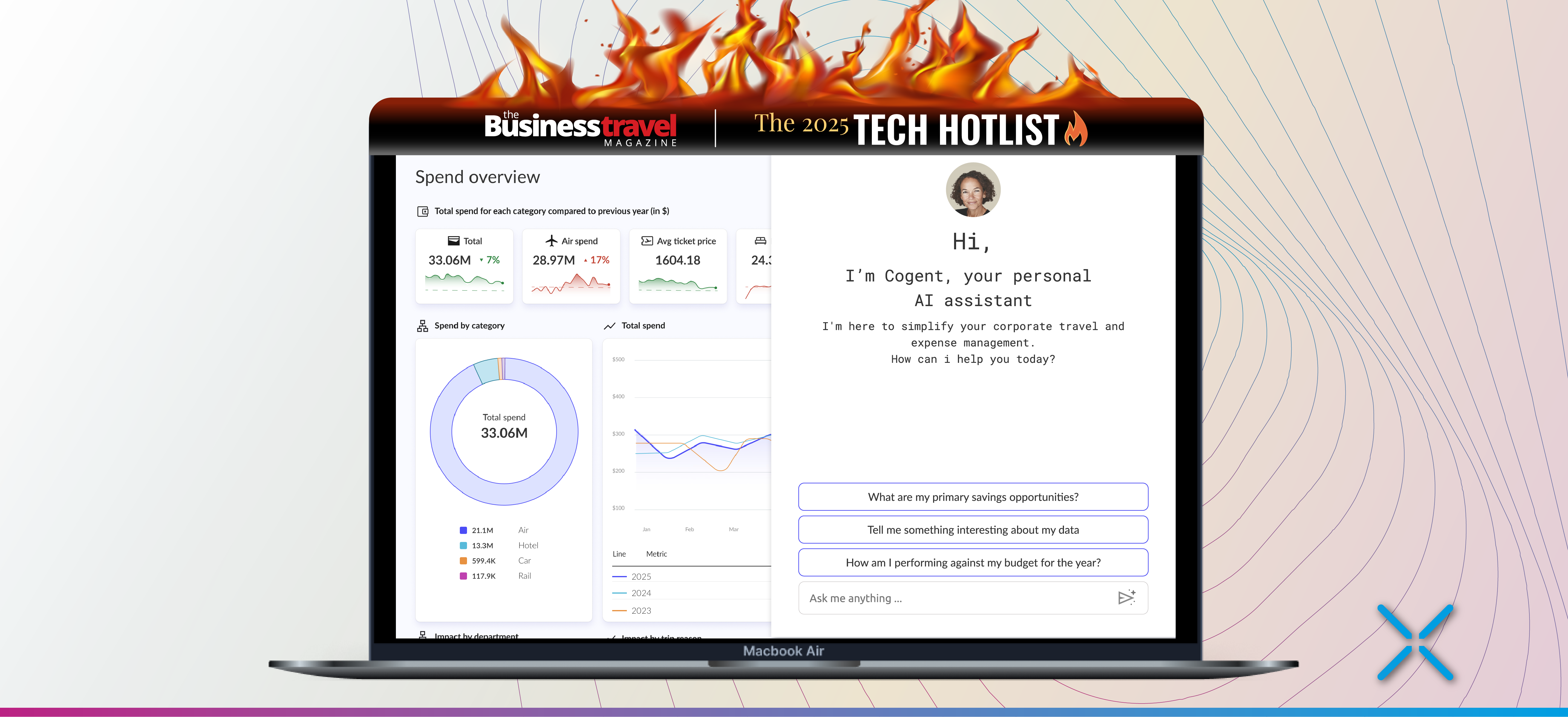
Hot List, Hot News: We've Been Named to the Tech Hotlist for Redefining Corporate Travel with Cogent Agentic AI
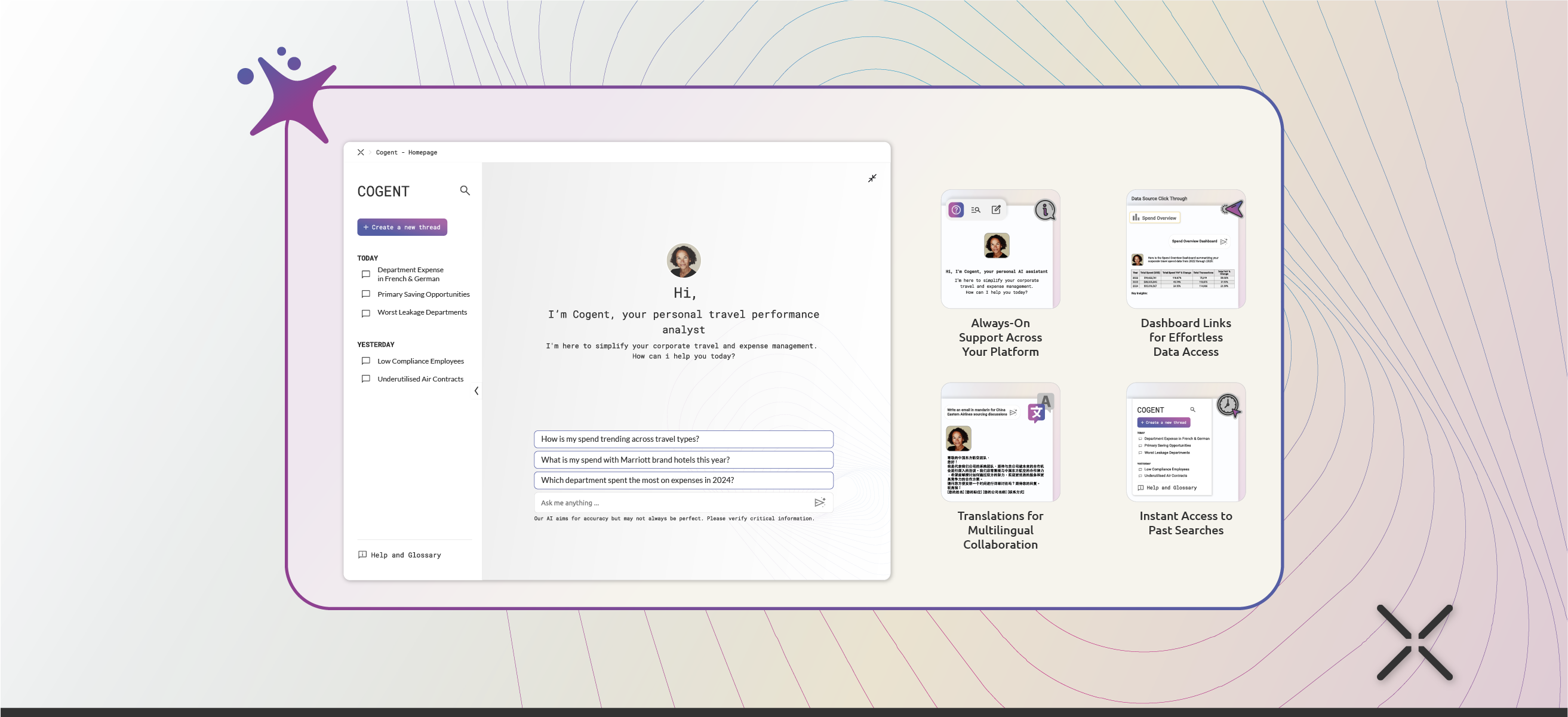
The T&E Manager of Tomorrow: How Cogent Agentic AI is Your Shortcut to Strategic Leadership in Corporate Travel
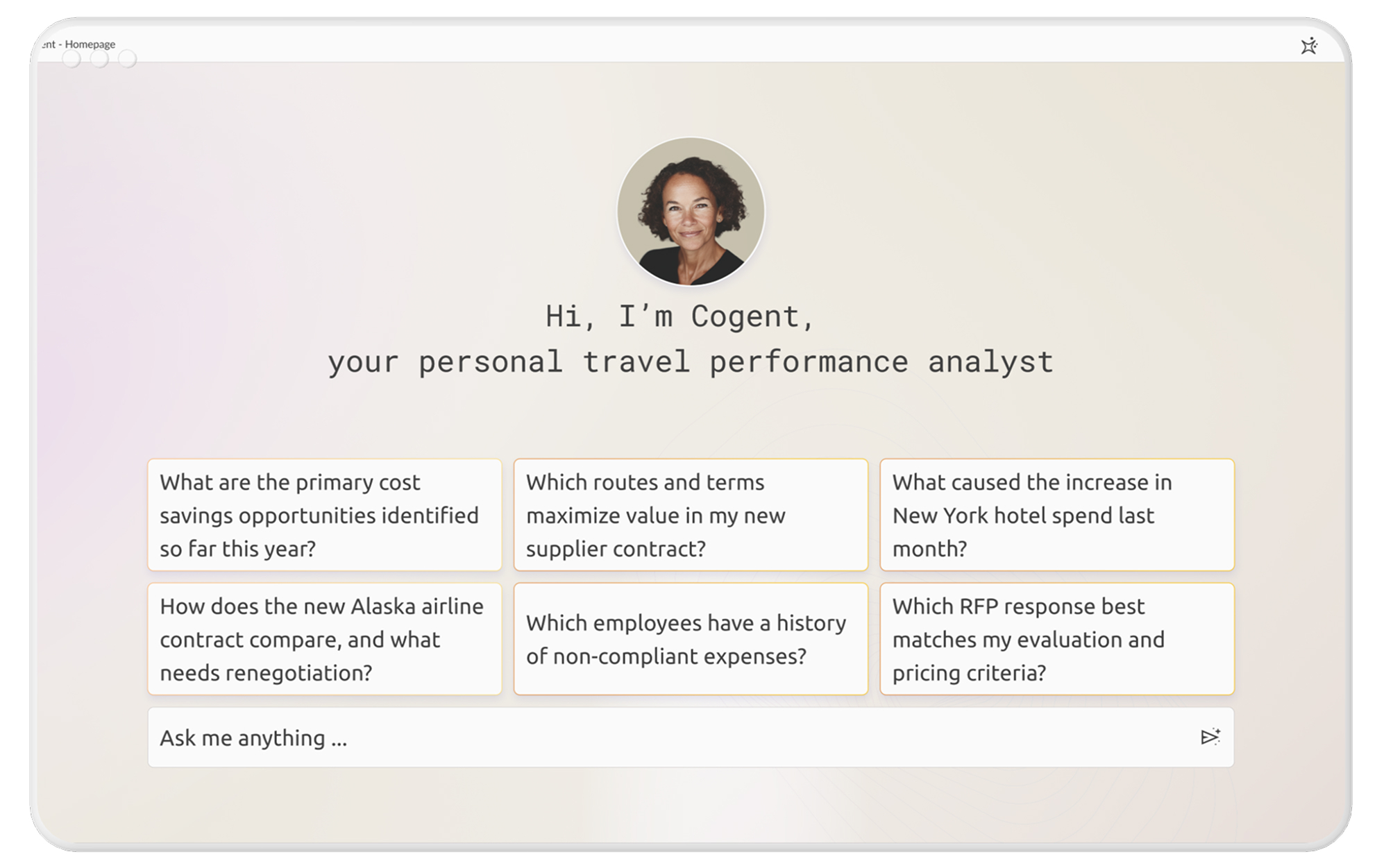
6 Powerful Cogent Use Cases for Travel & Expense (T&E) Reporting, Travel Data & Predictive Analytics with Agentic AI

Mastering the Future of Corporate Travel with Cogent Agentic AI: An Exclusive Interview with PredictX CEO Keesup Choe

Part 1: The AI Failure Epidemic: Why McDonald's & Air Canada's Failures Reveal a T&E Reporting Crisis
Part 2: Beyond the Code: The Strategic and Data Flaws Ensuring Your AI Project Fails
